
The College Founded by the Inventor of the Service Dog Is Right Here in Douglas County; Puppy Raisers Needed
A college founded by the inventor of the modern service dog is now based in Canyonville. Bergin College of Canine Studies trains service dogs for those in need, including Veterans, and is seeking local volunteers to help raise puppies now entering training.
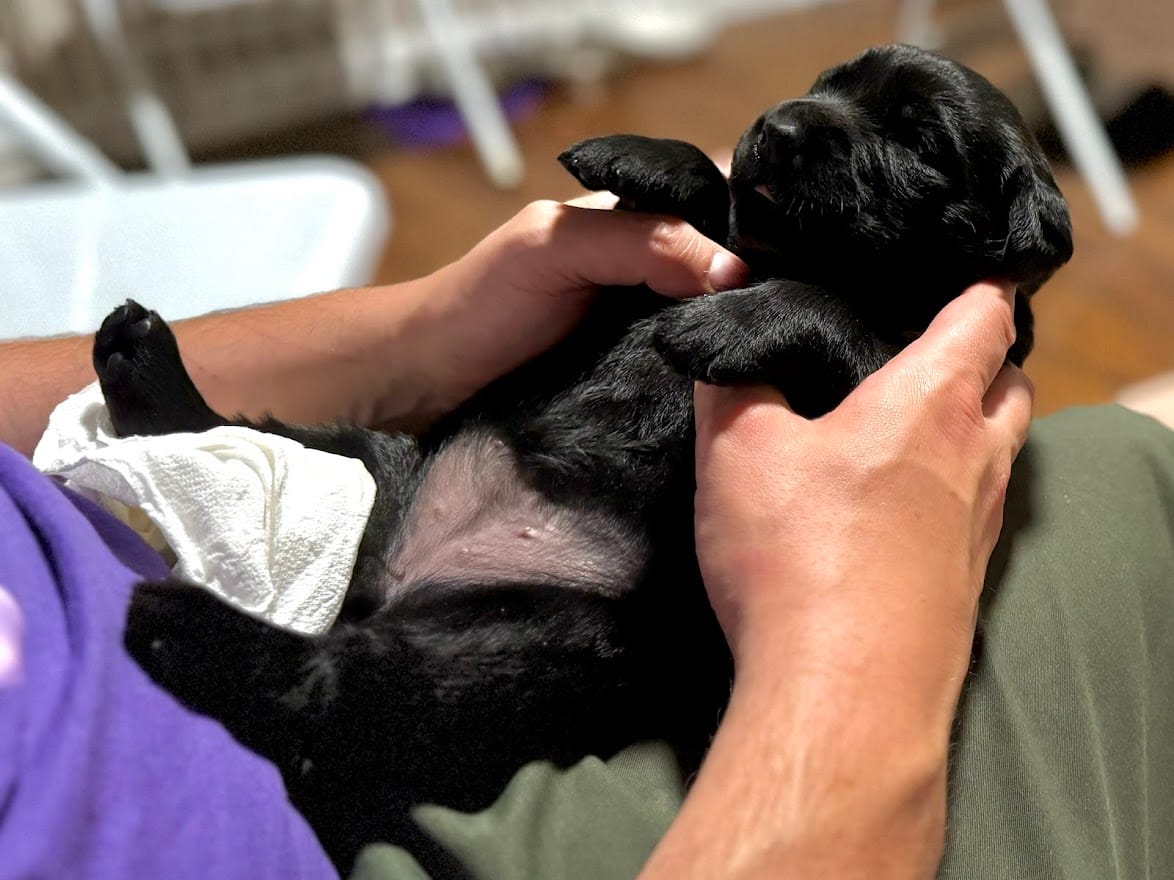
For many in Douglas County, the idea of a college dedicated entirely to Service Dogs may sound surprising. What surprises people even more is that the modern service dog concept traces back to the founder of that very school, and that the college is now based in Canyonville
Bergin College of Canine Studies operates from a 14-acre campus in Canyonville after relocating to the former Canyonville Christian Academy to expand its facilities and strengthen its educational and training environment. The college is both an academic institution and a nonprofit Service Dog organization, with a dual mission focused on education and purpose-driven dog training.
Right now, local volunteers are needed to serve as puppy raisers for Service Dogs In Training. This stage of development is critical, and two puppies are expected to be ready to move into homes within the next few weeks.
Where the Service Dog Began. One Partnership that Changed Everything
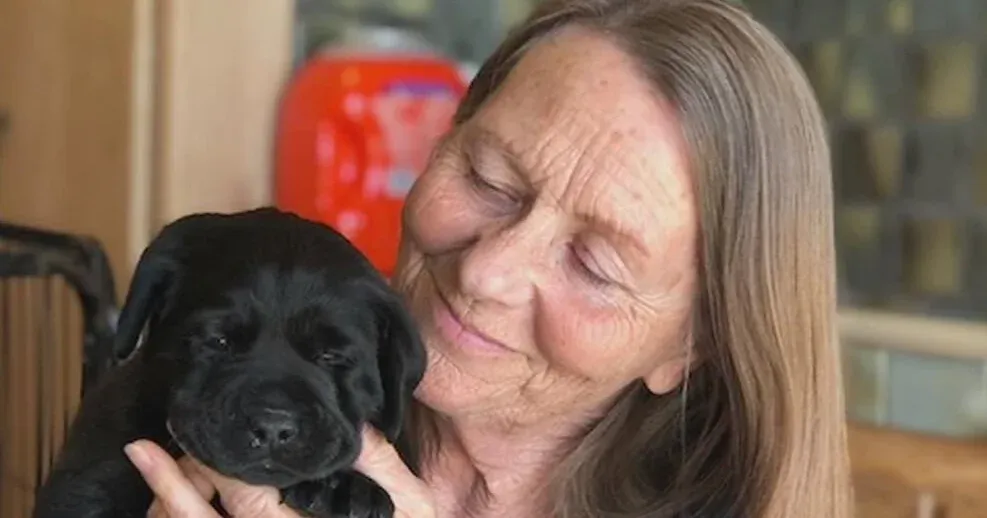
In the mid 1970s, Dr. Bonnie Bergin began challenging how society viewed disability and independence. At the time, people with severe physical disabilities were often institutionalized or expected to rely entirely on human caregivers to navigate daily life.
One of the first people she worked with was Kerry Knaus. Knaus used a wheelchair, and she could not hold her head upright without assistance. Addressing that need required rethinking what a dog could be trained to do, moving beyond obedience and into precise, reliable physical support and positioning.
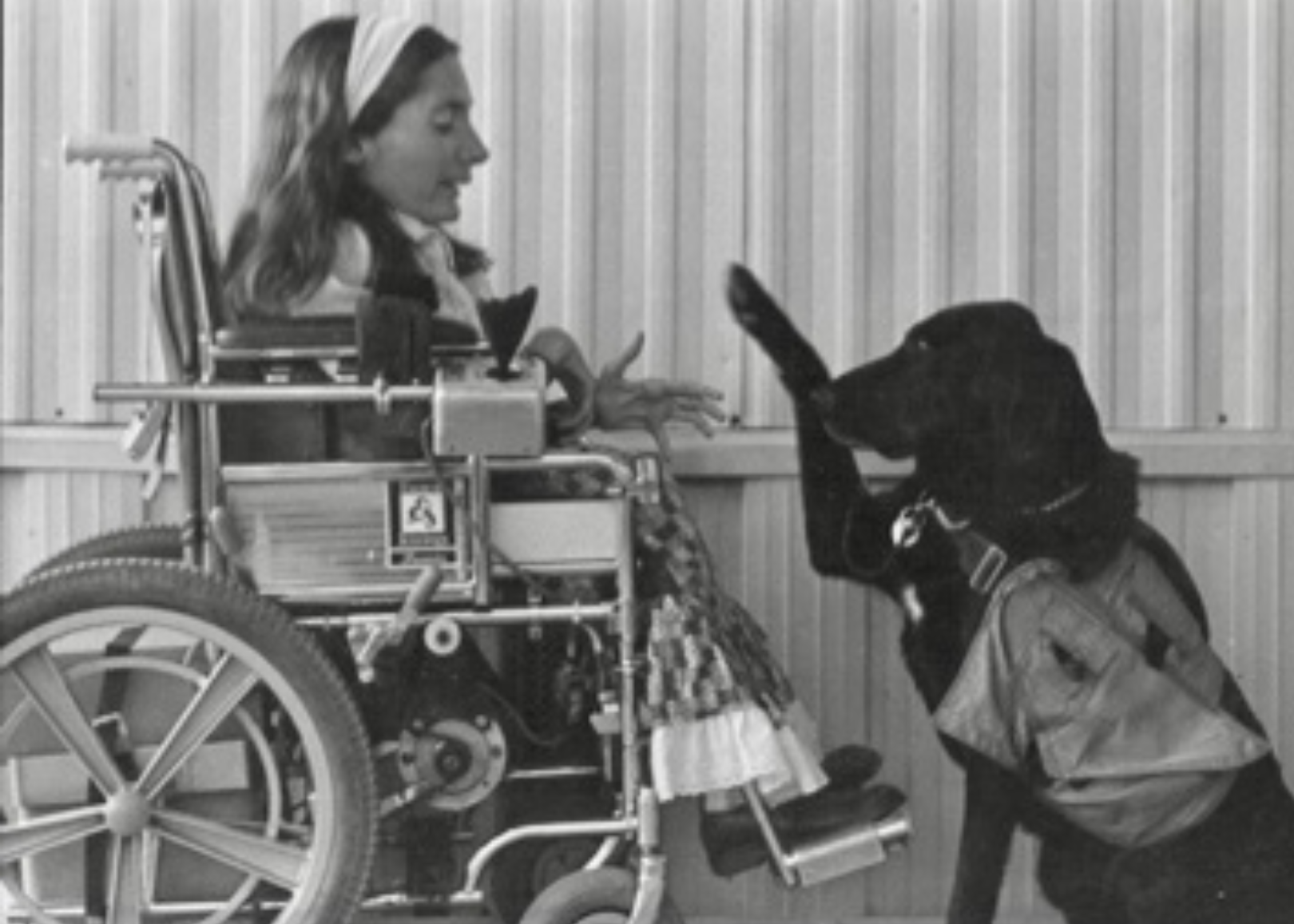
The dog trained for that early work was Abdul, recognized as the first service dog. Together, Knaus and Abdul became the first Service Dog Team the world came to know. Their partnership demonstrated that a dog could provide consistent, task based assistance while also offering something humans often cannot. Unconditional, unbiased support without judgment, expectation, or agenda.
The world said no. One dog, and one team, made it yes.
Independence from constraints, including constraints created by humans
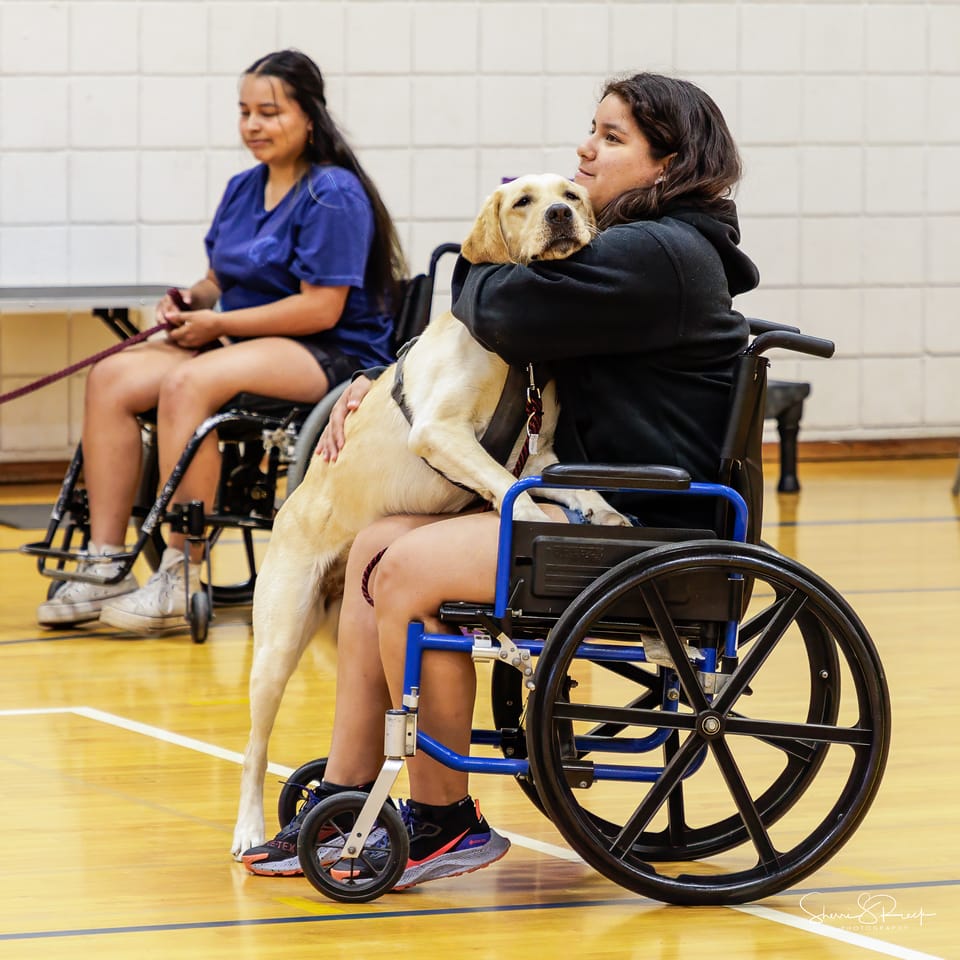
Independence is not only about mobility. It is also about freedom from the daily constraints that can come with relying on other humans. Even well meaning support can bring limitations, delays, misunderstandings, or judgment. A trained Service Dog is steady, consistent, and task focused, with a calm presence that does not change based on mood, bias, or social pressure. Dogs bring unconditional love. They are unbiased.
At Bergin College of Canine Studies, Service Dogs are educated to perform more than 112 strategic commands within a proprietary "SMARTEST DOG" training command system designed to support individuals with mobility needs and mental illness challenges.
What Service Dogs Offer That Humans Often Can’t
The virtues Service Dogs bring are often the very virtues people wish they could depend on more consistently from other humans.
Service Dogs do not judge. They do not betray trust. They do not hold grudges. They give steady companionship and loyal partnership, and they do it in a way that feels emotionally safe to many people, especially those who have lived through trauma. That reliability is not a slogan. It is part of what makes the service dog relationship unique. No betrayal. No judgment. Just love and trust, given freely.
Veterans, PTSD, and Why This Work Matters
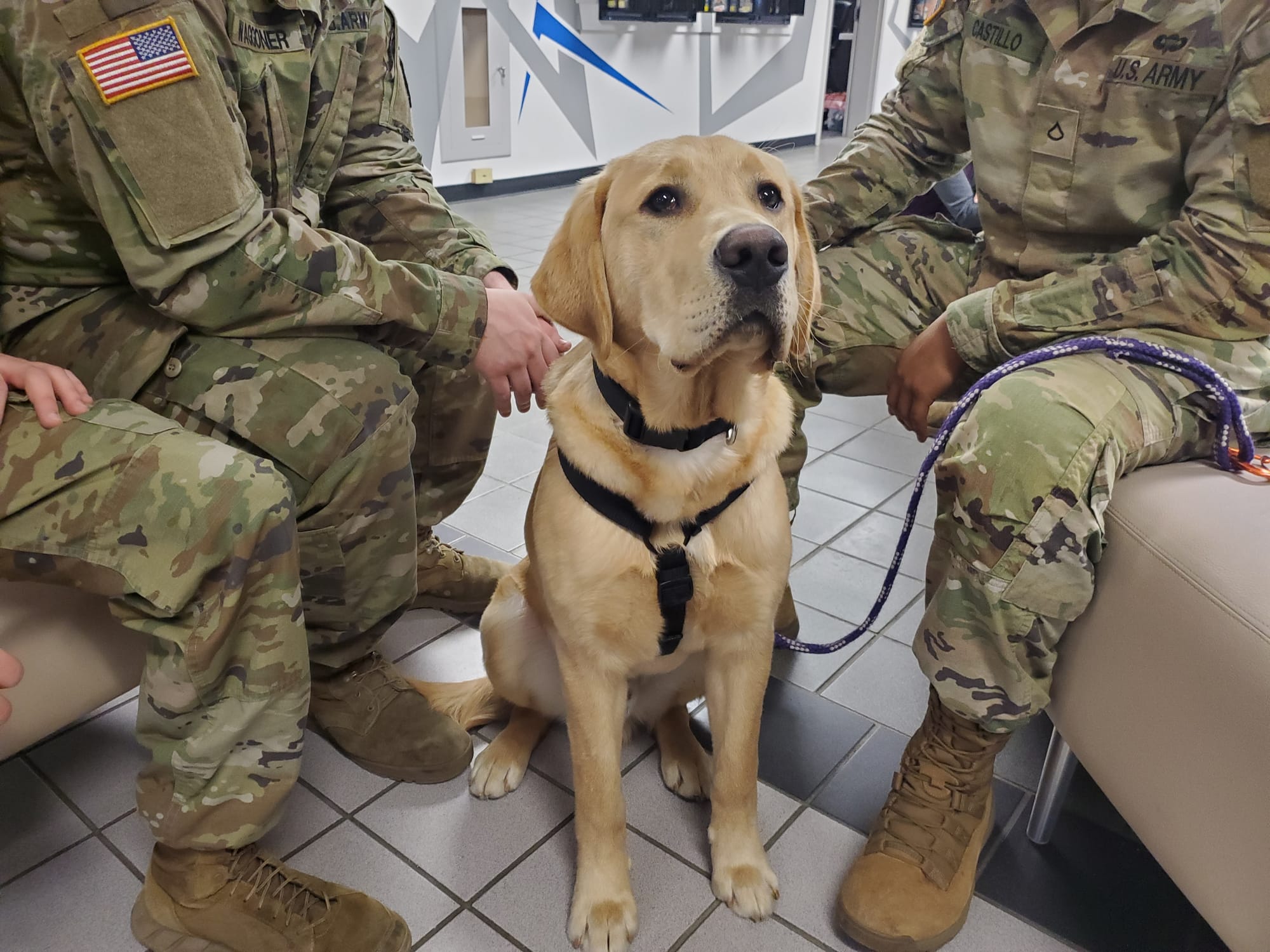
This mission places strong emphasis on Veterans, including those living with PTSD. For many Veterans, trauma is tied to human harm and human threats. Even after returning home, civilian life can bring a different kind of darkness through isolation, hypervigilance, and the feeling of being judged or misunderstood.
For many Veterans, the enemy they faced was human, and the nervous system does not always forget that. Back home, they can also feel harmed again in a different way by judgment, misunderstanding, and the pressure to explain what they have been through. A dog does not carry that human edge. Dogs are unbiased, unconditional, and loyal, and they look different from the source of the threat. If a stranger walked up and promised unconditional support, most people would hesitate. A dog proves it through presence and consistency.
A Service Dog offers something profoundly different. The dog does not resemble an enemy, does not interrogate someone’s pain, and does not require a person to explain themselves to be accepted. The dog provides presence, loyalty, and trained support that helps many handlers re enter public life, rebuild trust, and regain a sense of safety and independence.
Service Dogs help multiple segments of the community
Bergin College’s mission serves multiple segments of the community. Service Dogs can support people across many vulnerable groups, including Veterans, the elderly, children, incarcerated people, teens in juvenile halls, and others who need purpose, connection, and a path forward.
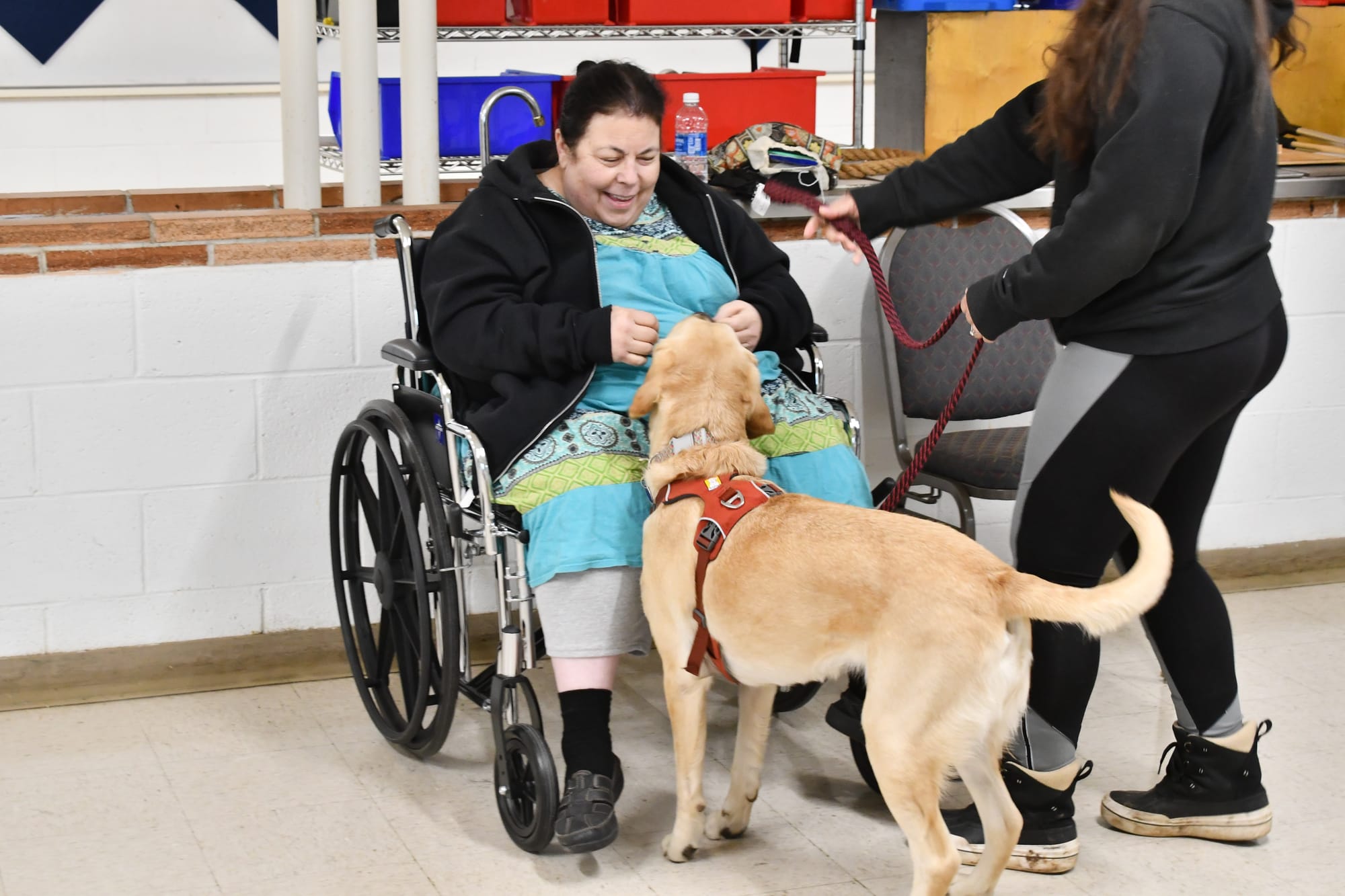
The common thread is not a demographic. It is need. The college’s message is that Service Dogs are for those who need them most, and that the impact reaches far beyond one category of client.
Paws for Purple Hearts, and a connected mission
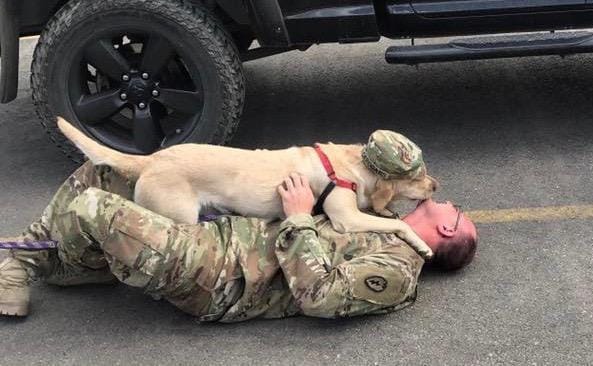
The program is closely connected to Paws for Purple Hearts (PPH), an independent nonprofit organization that shares deep roots with Bergin College of Canine Studies. While the two organizations operate separately, they work in reciprocal ways, grounded in a shared heritage, vision, and training philosophy centered on service dogs and Veteran support.
Puppies bred and nurtured through Bergin are placed into PPH’s nationwide network, where they are trained to support Veterans throughout their lives. Many instructors within PPH are Bergin graduates, and Bergin’s educational models, handling standards, and evidence-based training philosophies are treated as essential to the mission. Instructors who are not graduates of Bergin’s AS, BS, or MS programs undergo an extensive onboarding process aligned with Bergin’s deep-dive summer certificate–level training as a minimum standard.
PPH currently operates at seven locations across the United States, serving Veterans and active-duty service members through its Canine Assisted Warrior Therapy (CAWT) sessions and by placing service and facility dogs at no cost. These programs support individuals living with injuries related to military service, including post-traumatic stress disorder (PTSD), traumatic brain injuries (TBI), military sexual trauma (MST), and physical injuries.
Instructors and dogs work alongside Veterans Affairs staff and psychiatrists at PPH sites and VA facilities, with additional sessions conducted at Veterans Homes and aboard Navy ships. Two PPH locations, in Alaska and Texas, are also participating in Veterans Administration–related research tied to an Act of Congress known as the Puppies Assisting Wounded Servicemembers (PAWS) Act. PPH leadership has set a long-term goal of being within a two-hour reach of any Veteran in need of assistance.
Why Canyonville, and why community matters
Bergin College of Canine Studies relocated to Canyonville about two years ago and expanded into the former academy campus to support long term growth. The long term vision includes as many as 100 students on campus at a time, with each student paired with a dog in training.
College leaders have been direct about what that means for a small town. Dogs in training have public access rights. Students are still learning. Integration requires communication, patience, and local involvement. The goal is to become part of Canyonville in the most positive way possible.
That vision depends on community participation, not isolation.
How puppies become Service Dogs
Nicole Roberts, the Puppy Parent Manager at the college, explained that puppies move through three main stages on their path to service work, and volunteers play a meaningful role at every step.
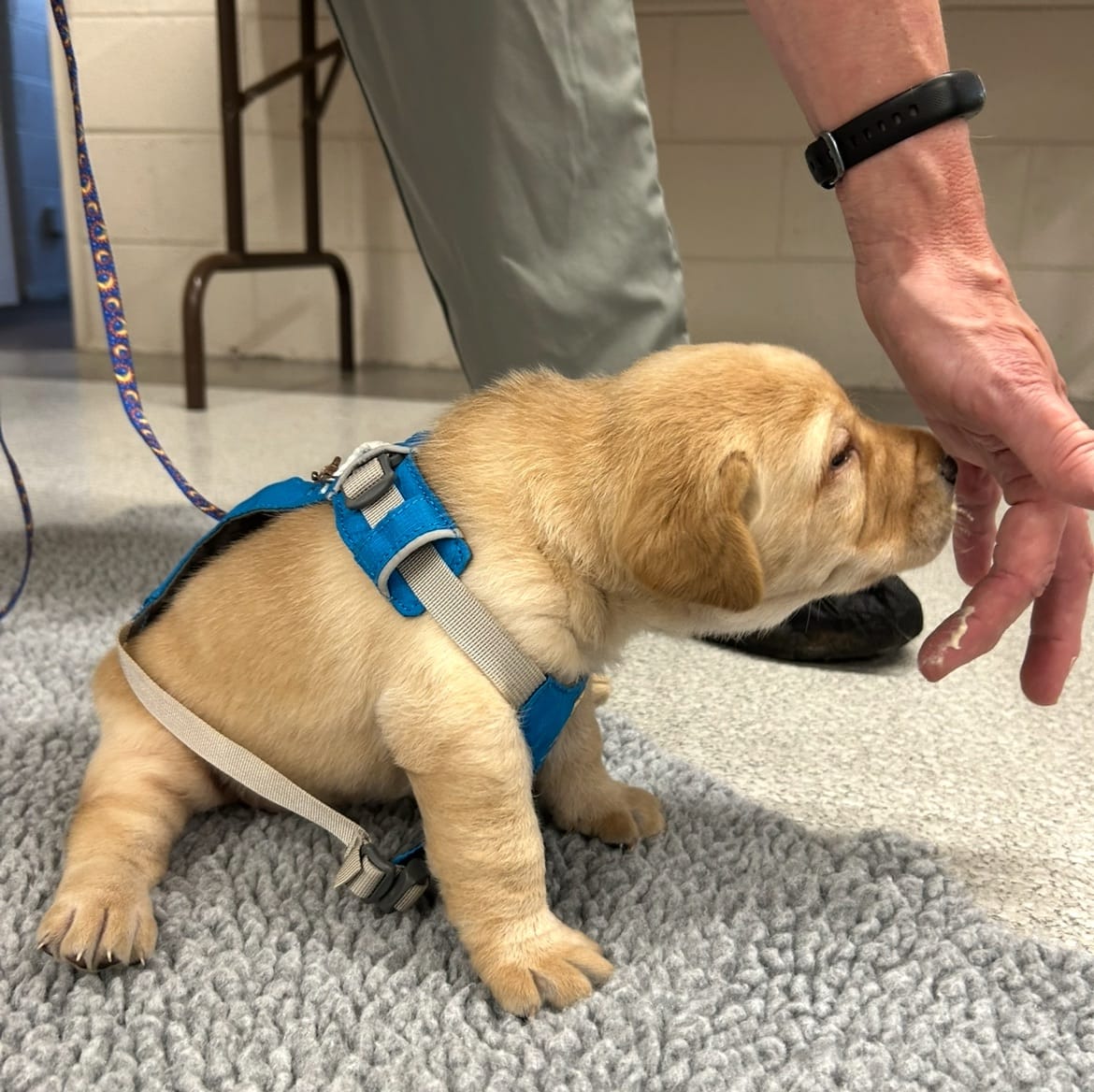
Stage one, Puppy Paradise
From birth to about 12 to 14 weeks, puppies live on campus in a dedicated area known as Puppy Paradise. During this period, puppies receive daily care, early training, and socialization from staff, students, and volunteers.
Volunteer puppy petters interact with puppies as early as two weeks old through gentle handling and positive touch during a critical stage of brain development.
Stage two, puppy raisers
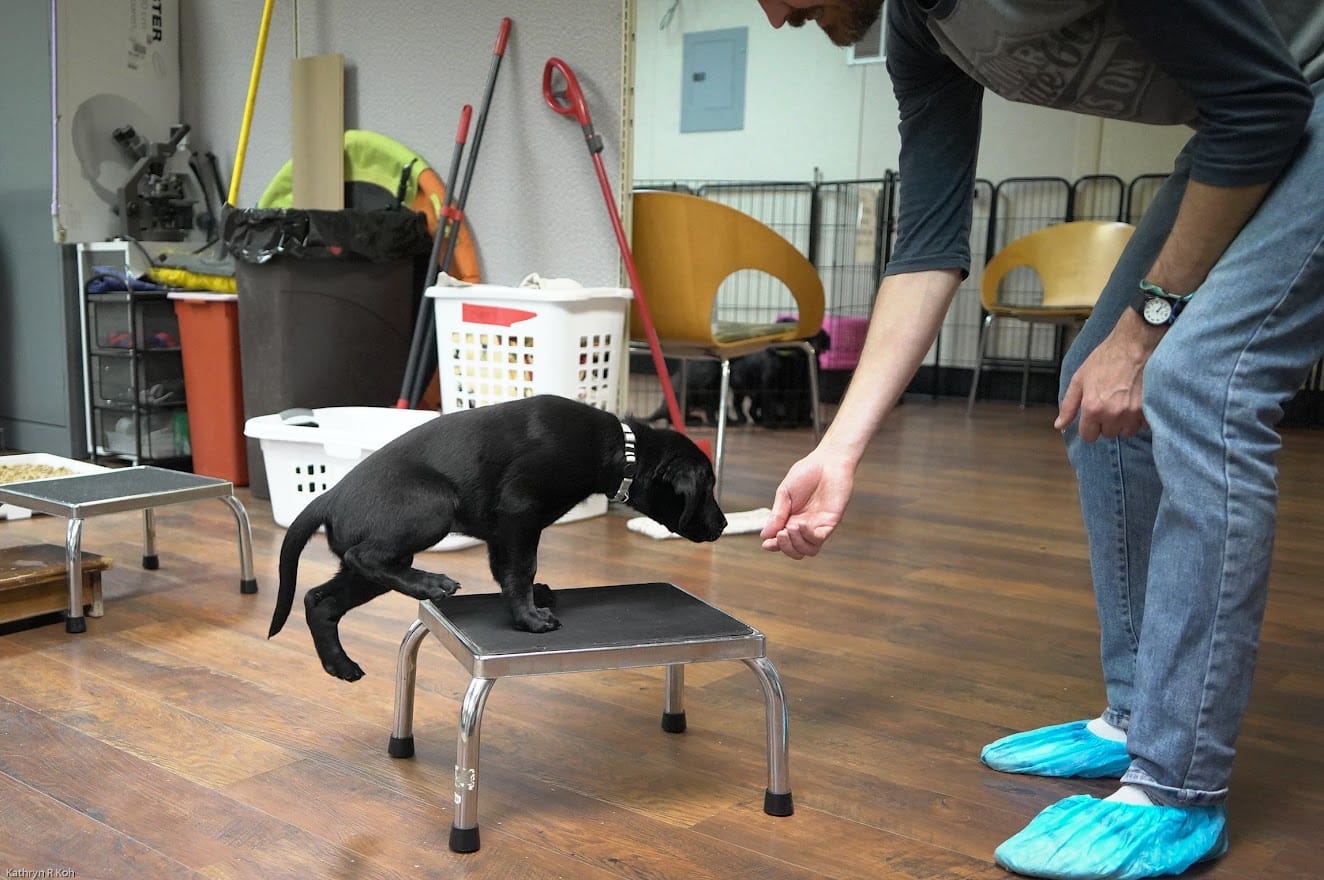
At around 12 to 14 weeks, puppies move into homes with volunteer puppy raisers. Raisers help puppies learn how to live in a home environment, practice basic obedience, and build confidence through exposure to everyday sights, sounds, and experiences.
These dogs are Service Dogs In Training and are supported through college provided training guidance and veterinary care.
Stage three, advanced training
At about a year to a year and a half, dogs return to the college to work closely with students on advanced training and preparation for graduation. During school breaks, the program may also need short term foster homes to provide stability for dogs in training.
Why puppy raisers matter now
Volunteers are woven into every stage of a dog’s development. Two puppies are ready to move into stage two and need raisers.
Puppy raisers are not expected to train dogs on their own. The program provides support, structure, and guidance. What volunteers provide is a stable home, daily routines, and real world experience that helps dogs grow into calm, confident partners for future handlers.
Why Volunteers Do This Work
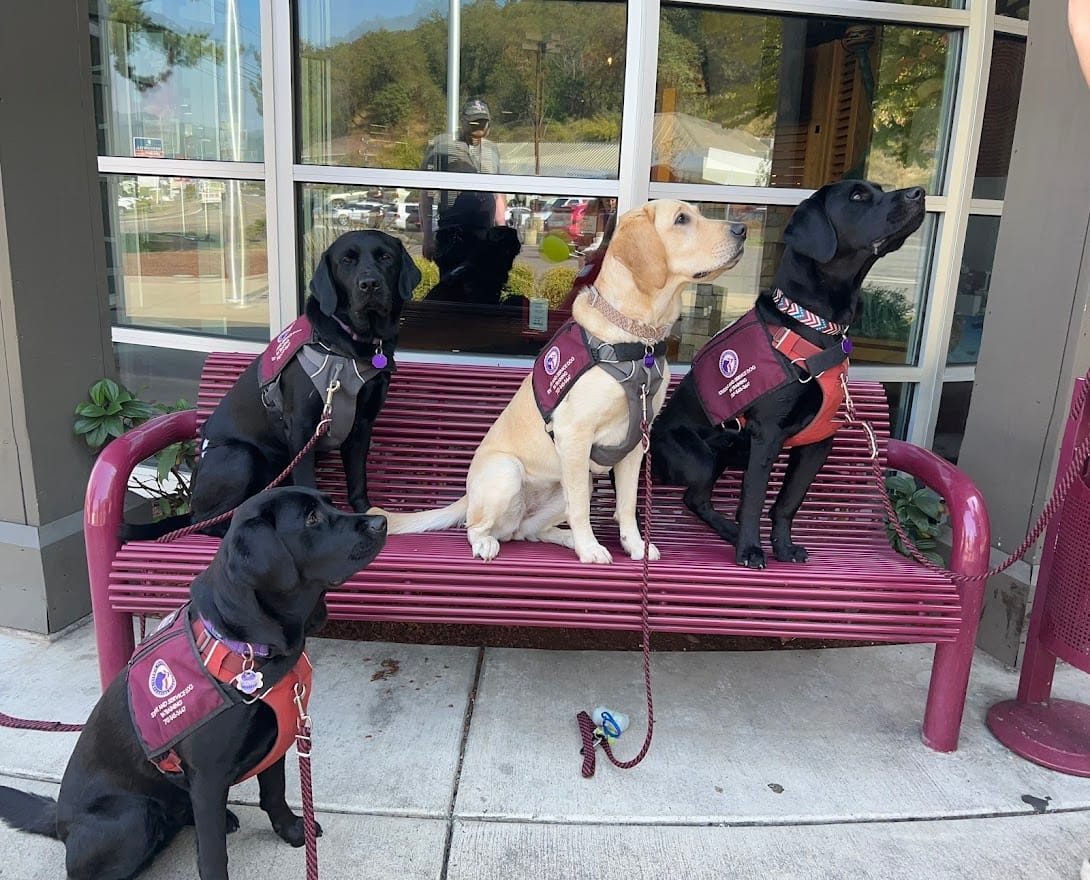
Volunteers do this for a higher purpose. To help humanity, and to help those who need the dog the most in the end.
Fostering a Service Dog In Training and then letting that dog go is one of the hardest things volunteers do. The dogs feel like children. Volunteers keep going because they believe their dog, raised with love, is going on to do great things. They keep the dogs in their hearts even after they leave the nest.
Love lives at the intersection of service for others. Where love meets service.
How to get involved
Bergin College of Canine Studies is currently accepting applications for puppy raisers, puppy petters, and short term foster volunteers. Those interested can contact the college to learn about requirements, time commitment, and next steps.
Email: Nicoler@berginu.edu
Phone: 707 779 2070
Contact Form: https://forms.gle/rkE4mN6hh6AgW24L6
Address: 250 E 1st Street, Canyonville, OR 97417
Coverage
Stay tuned as The Roseburg Receiver and The Roseburg Plug continue sharing the story of Bergin College of Canine Studies, with more segments ahead highlighting its history, mission, and impact.

Comments ()