
New Oregon Waterway Permit Requirements Take Effect in 2026
Oregon’s new 2026 waterway rules require nearly all paddlecraft: kayaks, SUPs, rafts, and more - to carry a Waterway Access Permit. Fees start at $6, with funds supporting access, safety, and invasive species prevention statewide.
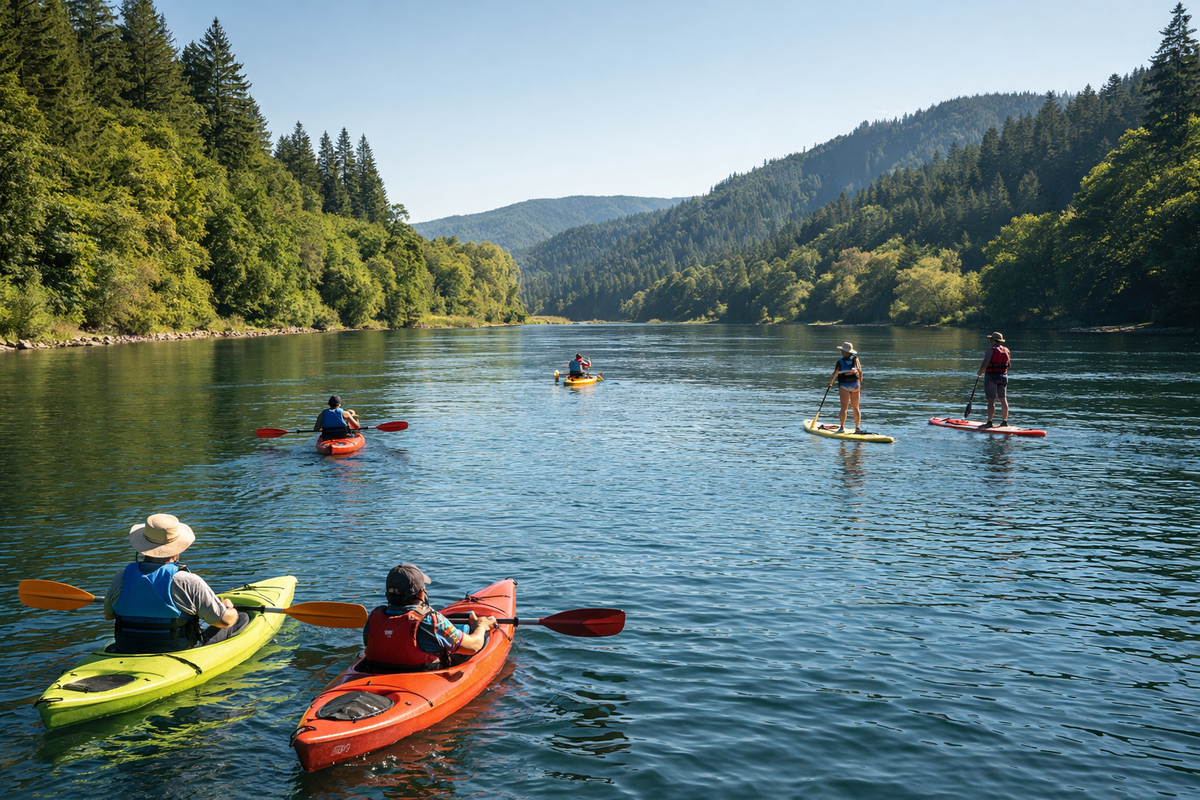
ROSEBURG, Ore. — Beginning January 1, 2026, nearly all non-motorized watercraft operating on Oregon’s lakes and rivers will be required to carry a Waterway Access Permit, following recent updates to state law.
The expanded requirement affects kayaks, canoes, rafts, stand-up paddleboards (SUPs), and their inflatable versions, regardless of length. Previously, only non-motorized boats 10 feet or longer were required to carry a permit.
What’s Changing
Under the updated law, all operators of non-motorized boats must carry a permit while on the water, with limited exceptions. Youth under the age of 14 are exempt.
Motorized boats and out-of-state watercraft have already been subject to aquatic invasive species (AIS) permit requirements for more than a decade. The 2026 change expands the program to include smaller paddlecraft.
Permit Options and Costs
Permits can be purchased through the Oregon State Marine Board (OSMB) Boat Oregon Store, the ODFW Electronic Licensing System, the MyODFW mobile app, or through authorized ODFW license agents.
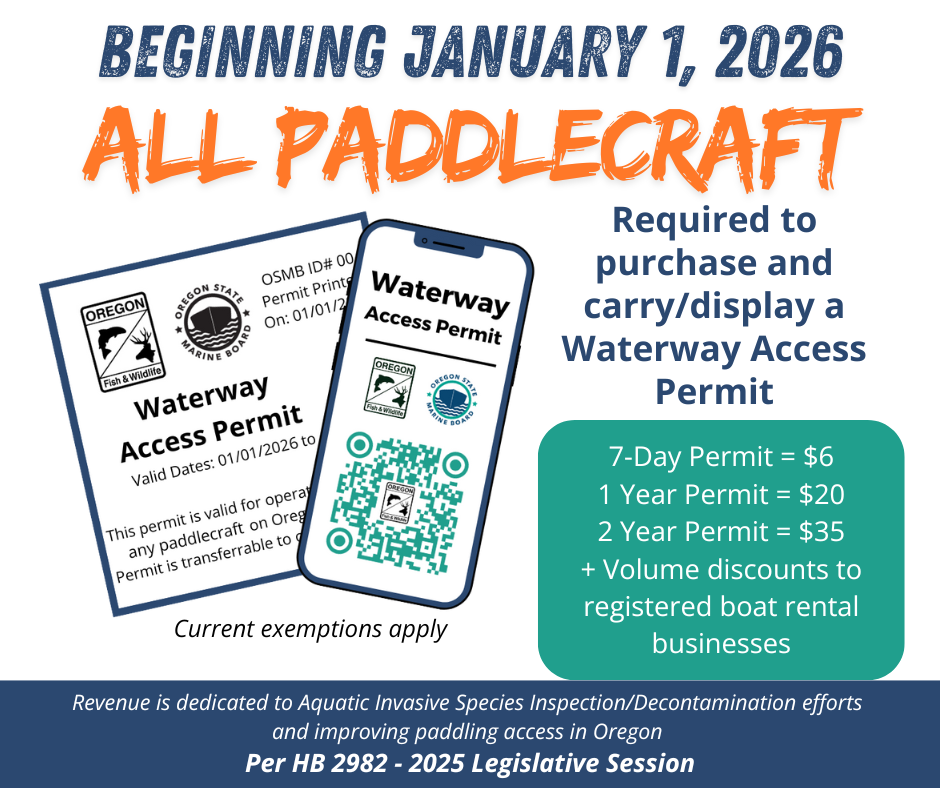
Permit options include:
- 7-Day Permit
- $6 through the Boat Oregon Store
- $8 through ODFW (includes transaction fee)
- 1-Year Permit
- $20 through Boat Oregon
- $22 through ODFW
- 2-Year Permit
- $35 through Boat Oregon
- $37 through ODFW
Additional transaction fees apply depending on the platform used. Permits may be displayed digitally or printed and must be carried while on the water.
Permits are transferable between non-motorized boats but only one permit may be used per boat at a time.
Enforcement and Penalties
Failure to carry a required permit may result in a citation. First-time violations can result in fines of approximately $115.
Where the Money Goes
Revenue from the Waterway Access Permit program is used to fund:
- Public boat ramps and access points
- Low-freeboard docks and paddle-friendly launches
- Safety education programs
- Equipment purchases for underserved communities
- Aquatic invasive species prevention and inspection stations
Since 2021, more than $4.6 million has been awarded statewide through Waterway Access Grants.
Roughly one-third of permit revenue supports aquatic invasive species inspection stations operated in partnership with the Oregon Department of Fish and Wildlife (ODFW), particularly in high-risk areas tied to irrigation and drinking water systems.
Legislative Background
The permit expansion was approved through House Bill 2982, which broadened funding for invasive species prevention and increased oversight at waterway inspection stations.
Community Response
The new requirements have sparked public discussion across the state. Some paddlers have expressed concern over additional costs and enforcement, while others support the funding of access improvements and environmental protections.
A grassroots petition effort known as “Let Us Paddle” has begun gathering signatures to place a repeal measure before voters. Organizers say volunteers are collecting signatures in person across Oregon.
Key Takeaways
- All non-motorized boats require a permit starting in 2026
- Youth 13 and under are exempt
- Permits are transferable between boats
- Revenue funds access, safety, and invasive species prevention
- Permits are available now for 2026 and 2027
For more information or to purchase a permit, visit the Boat Oregon Store or MyODFW.
Visit the Waterway Access Permit FAQs for more detailed information.



Comments ()