
Proposed Order Would Require New Fish Passage at Winchester Dam by 2028
A proposed order would require the Winchester Water Control District to build new fish passage at Winchester Dam by 2028. The ruling follows a contested case over whether 2023 dam repairs triggered modern fish passage requirements under Oregon law.
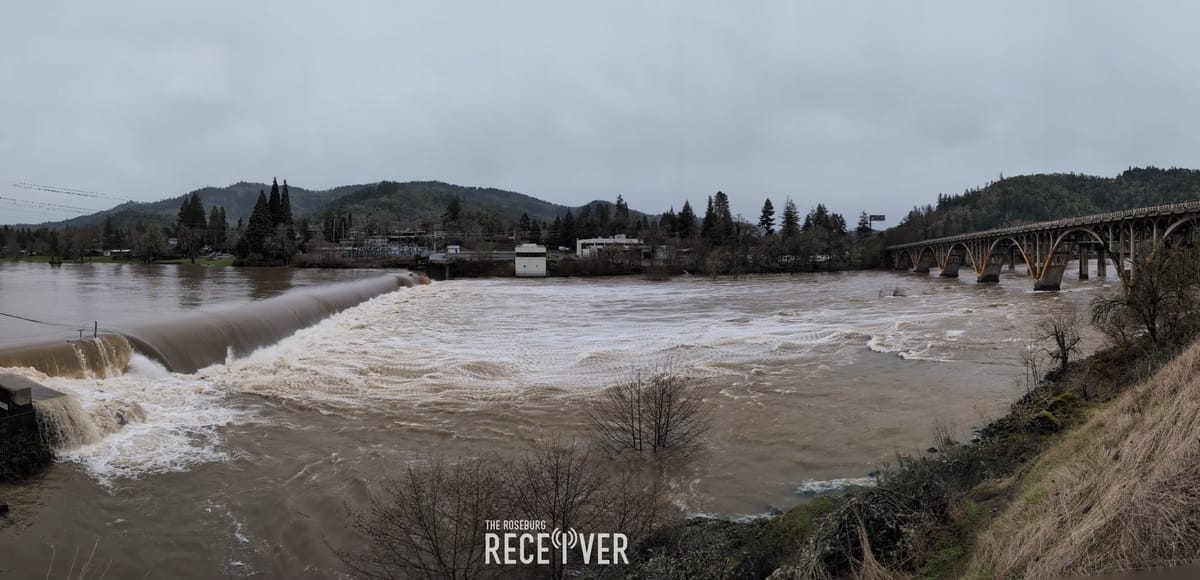
A proposed order issued in a contested case involving the Winchester Water Control District and the Oregon Department of Fish and Wildlife would require construction of new fish passage facilities at Winchester Dam by the year 2028, according to the ODFW proposed order referenced in the case. The order follows extensive repairs completed at the dam in 2023.
The decision comes after a five day administrative hearing held in July 2025 before the Oregon Office of Administrative Hearings. The case centered on whether repair work at the dam constituted construction under Oregon law, which would trigger an obligation to install fish passage that meets current state standards. The administrative record closed in October 2025.
Winchester Dam Background
Winchester Dam is located on the North Umpqua River approximately five miles north of Roseburg. Originally built in the late nineteenth century and reconstructed in the early twentieth century, the dam is approximately 450 feet wide and 17 feet tall. It creates an upstream impoundment used primarily for flatwater recreation by roughly 110 to 120 adjacent property owners.
A fish ladder was added to the dam in 1923, and additional modifications were made in the 1980s during a period of hydroelectric generation that later ceased. According to ODFW, the dam currently impedes passage for multiple native migratory species including coho salmon, spring and fall Chinook salmon, summer and winter steelhead, cutthroat trout, and Pacific lamprey.
The dam is listed as the second highest ranked privately owned structure on ODFW’s Statewide Fish Passage Priority List.
Safety Concerns and Repairs
In 2019, the Oregon Water Resources Department inspected the dam and rated it in poor condition due to seepage, internal voids, and uncertainty about its structural integrity. Inspectors warned that failure to address the issues could lead to enforcement action or potential dam removal.
In response, the Winchester Water Control District approved bond funding and undertook major repairs in 2023. The work included filling internal voids, reinforcing structural elements, addressing leakage, and replacing portions of the dam face. Fish passage was temporarily closed during parts of the repair period.
The district maintains that the work was necessary to ensure dam safety, was conducted within the existing footprint of the structure, and was intended as repair and maintenance rather than new construction.
Differing Views on Fish Passage Requirements
The Winchester Water Control District argues that the 2023 work should not trigger modern fish passage requirements. District representatives point to years of communication with ODFW staff prior to construction, during which they were told that similar repairs were unlikely to meet thresholds that would require new fish passage under the rules then in effect. The district also states it took steps to minimize impacts to fish during construction.
ODFW contends that the scope and scale of the repairs went beyond routine maintenance and qualify as construction under Oregon’s fish passage statutes and updated administrative rules. According to the department, allowing extensive rehabilitation without upgrading fish passage would be inconsistent with the intent of state law, which aims to incrementally improve passage at artificial obstructions when significant work occurs.
Administrative Law Judge Decision
In the proposed order, the administrative law judge concluded that the 2023 repairs constituted construction and that ODFW has the authority to require the installation of department approved fish passage facilities at Winchester Dam.
The proposed order requires that new, legally compliant fish passage be completed by 2028. It does not mandate immediate removal of the dam, nor does it finalize the design, cost, or exact location of new fish passage facilities.
Involvement of Conservation and Fishing Groups
Several conservation and fishing organizations participated in the case as limited parties, including WaterWatch of Oregon, Steamboaters, the Pacific Coast Federation of Fishermen’s Associations, and the Institute for Fisheries Resources. These groups supported the state’s position and were represented by attorneys during the proceedings.
In a press release issued following the decision, representatives of those organizations praised the ruling and emphasized the ecological importance of restoring fish passage on the North Umpqua River. They cited concerns about aging infrastructure, fish injury risks, and long term access to upstream habitat.
In a press release following the decision, conservation groups estimated that construction of new fish passage facilities could cost more than $70 million. No final design or cost estimate has been approved, and the Winchester Water Control District has not released its own cost projection.
The Winchester Water Control District has not issued a public response to the press release. The district has previously stated that fish passage improvements and dam safety must be balanced with financial feasibility, property impacts, and regulatory consistency.
What Comes Next?
The proposed order is subject to final agency action. If adopted, the Winchester Water Control District would be required to work with ODFW to design and construct fish passage facilities that meet current standards by 2028.
Further permitting, engineering review, and potential legal or administrative steps are expected before construction begins. The outcome may have implications beyond Winchester Dam, as Oregon continues to apply updated fish passage rules to aging dams across the state.
Sources: Waterwatch and OAH (Office of Administrative Hearings)

Comments ()